
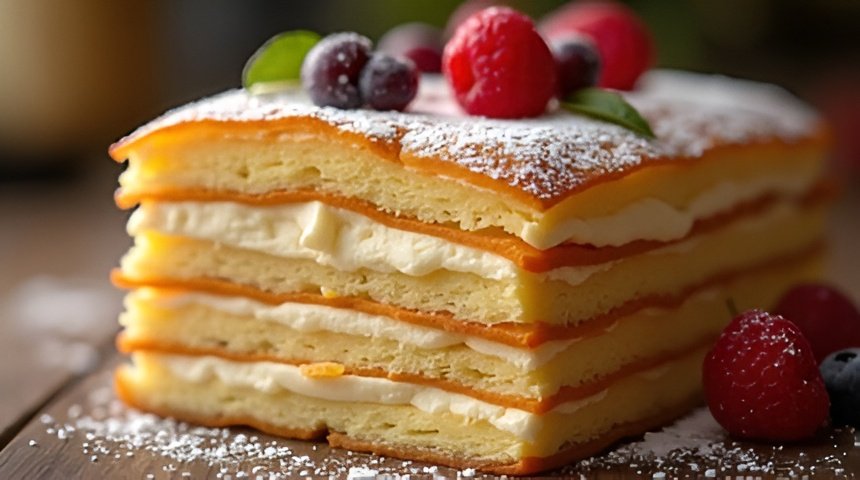
milhojas is a layered pastry made from thin sheets of puff pastry stacked with filling in between. The name literally translates to “a thousand sheets,” which is more poetic than literal—but it captures the idea perfectly.
Think of it like this:
- Crisp pastry layers that shatter slightly when you bite
- Smooth filling that softens everything
- A light topping of sugar, glaze, or cream
That contrast is the whole point. Crunch meets cream. Structure meets softness.
Most versions use:
- Puff pastry (homemade or store-bought)
- Pastry cream (custard-style filling)
- Whipped cream or dulce de leche
- Powdered sugar or icing on top
It looks simple. It tastes layered in every sense of the word.
Where Milhojas Comes From
Milhojas has European roots, closely tied to the French mille-feuille, but its journey doesn’t end there.
French pastry chefs refined puff pastry techniques centuries ago, creating delicate laminated doughs that rise into hundreds of thin layers. That technique spread across Europe and eventually Latin America, where local ingredients and traditions reshaped it.
In Spain and across Latin America, milhojas became something personal. In Argentina, it’s often filled with dulce de leche. In Peru, it might lean more toward light pastry cream. In Mexico, you’ll even find versions with caramelized sugar tops.
It’s one of those desserts that traveled well because it adapts easily. Same structure, different soul depending on where you are.
Why Milhojas Works So Well (The Real Secret)
There’s a reason this dessert has stayed relevant for so long. It’s not luck—it’s chemistry.
1. Texture contrast
Crisp pastry plus soft cream is addictive. Your brain loves contrast.
2. Controlled sweetness
Unlike heavy cakes, milhojas doesn’t overwhelm you. It builds flavor slowly.
3. Layer psychology
Multiple thin layers make each bite slightly different. It keeps you interested.
4. Balance of richness
Even though it feels indulgent, it doesn’t sit heavy if made properly.
What this really means is simple: it’s engineered for pleasure without fatigue.
Ingredients That Make or Break Milhojas
Good milhojas doesn’t need luxury ingredients. It needs balance and technique.
Puff Pastry
This is the foundation. Store-bought works, but homemade gives better control over crispness.
Cream Filling
Classic pastry cream is made with:
- Milk
- Egg yolks
- Sugar
- Cornstarch or flour
- Vanilla
Some modern versions use whipped cream or mascarpone for lighter texture.
Sweet Finish
- Powdered sugar for simplicity
- Caramel glaze for richness
- Chocolate drizzle for depth
Each topping changes the personality of the dessert.
How Milhojas Is Made (Step-by-Step Overview)
Even though it looks complex, the process is surprisingly structured.
Step 1: Bake the pastry
Roll out puff pastry and bake until golden and crisp. Some bakers prick it with a fork to control puffing.
Step 2: Prepare the cream
Cook milk, sugar, egg yolks, and starch until thick. Cool it completely before using.
Step 3: Layering
Alternate pastry sheets with cream. Usually 3–5 layers, depending on style.
Step 4: Chill
This step matters more than people think. It stabilizes the structure.
Step 5: Finish
Dust with sugar or glaze the top layer.
Simple in theory, precise in execution.
Popular Variations of Milhojas Around the World
Milhojas doesn’t stay in one identity for long. It adapts like a traveler.
Spanish Milhojas
Often filled with custard and topped with powdered sugar.
Latin American Milhojas
Heavier on dulce de leche, sometimes with whipped cream.
French Mille-Feuille
More refined, usually with fondant icing and intricate presentation.
Modern Fusion Versions
- Nutella milhojas
- Matcha cream layers
- Fruit-based fillings like strawberry or mango
Each variation tells a different cultural story while keeping the same structure.
The Experience of Eating Milhojas
Here’s the thing—milhojas is not just eaten, it’s experienced.
The first bite is always a little messy. The top layer cracks slightly, sometimes flakes off. Then the cream takes over, soft and cool, balancing everything out.
By the second bite, you understand the rhythm:
Crunch → cream → repeat.
It’s a dessert that forces you to slow down without asking you to.
Common Mistakes When Making Milhojas
Even experienced bakers get this wrong sometimes.
1. Soggy pastry
This happens when cream is too warm or layers are assembled too early.
2. Overly sweet filling
Milhojas loses its charm when sugar dominates.
3. Uneven layers
This affects structure and makes slicing messy.
4. Skipping chilling time
Without chilling, the dessert collapses when cut.
Good milhojas is patient food. Rushing it rarely works.
Professional Tips (From Real Bakery Practice)
If you want bakery-level results, here’s what professionals focus on:
- Bake pastry until deeply golden, not pale
- Let pastry cool completely before layering
- Use a sharp serrated knife for clean slices
- Add a thin cream layer on top before final decoration for smooth finish
- Chill overnight if possible for clean structure
These small details change everything.
Why Milhojas Still Matters Today
In a world full of overdesigned desserts, milhojas stays grounded. It doesn’t rely on gimmicks or trends. It’s built on technique, texture, and balance.
It also carries nostalgia. Many people first tasted it in small bakeries, family gatherings, or holiday tables. That emotional link is powerful.
Food trends come and go, but layered desserts like this stay because they connect memory with flavor.
Nutritional Perspective (Simple View)
Let’s be honest—milhojas isn’t health food. But it’s also not meant to be.
- Moderate calories per serving
- High satisfaction per bite
- Rich in dairy-based nutrients (depending on filling)
The real value here is emotional, not nutritional.
Serving Ideas
Milhojas works well:
- With coffee or espresso
- As a celebration dessert
- In small slices for tea-time
- With fruit garnish for freshness
It’s flexible, which is part of its long life in global cuisine.
FAQs About Milhojas
1. What is milhojas made of?
Milhojas is made from layers of puff pastry filled with pastry cream, whipped cream, or dulce de leche.
2. Is milhojas the same as mille-feuille?
They are very similar. Mille-feuille is the French version, while milhojas is popular in Spain and Latin America with regional variations.
3. Why is my milhojas soggy?
Usually because the cream was too warm or the dessert wasn’t chilled properly before serving.
4. Can I make milhojas at home?
Yes. Store-bought puff pastry makes it much easier, and the filling is simple to prepare.
5. How long does milhojas last?
It’s best eaten within 24–48 hours while the pastry still holds its crisp texture.
Read also: Best Sonso Yuca Near Me Guide For Finding The Cheesy Sonso