
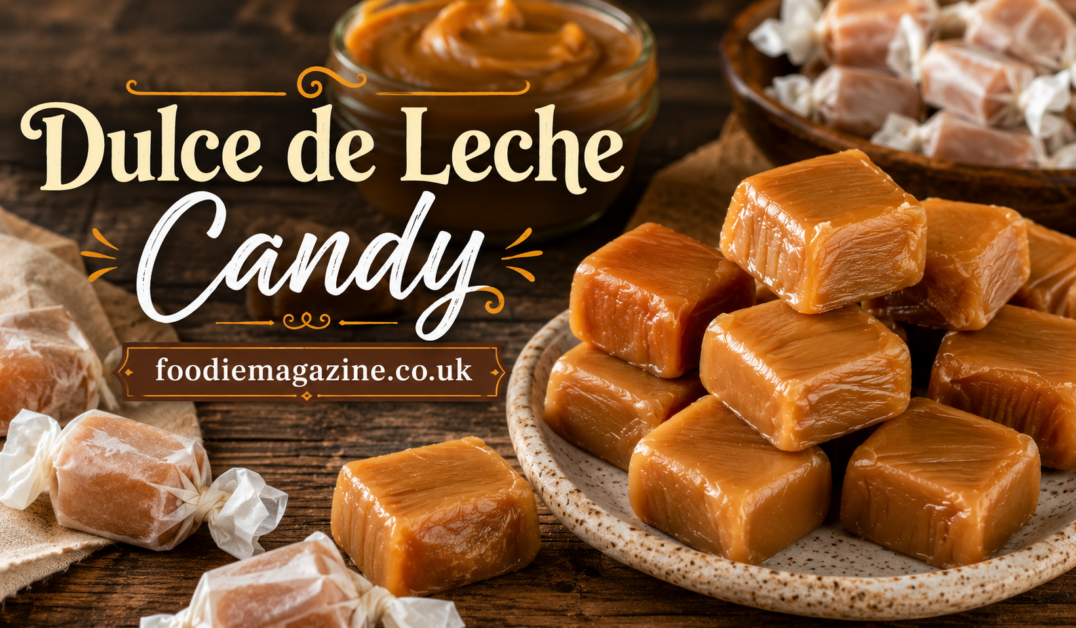
In countries like Argentina and Uruguay, dulce de leche candy isn’t just a sweet—it’s part of everyday life. It shows up in breakfast spreads, birthday cakes, and homemade gifts wrapped in wax paper.
There are different stories about its origin. Some say it was discovered by accident when milk and sugar were left cooking too long. Others trace similar recipes across Europe and Latin America, evolving independently over time.
What matters more than the origin story is how it became a cultural constant. A shared taste across generations.
Today, it’s also popular in places like Mexico, where it blends into traditional sweets, candy shops, and festive desserts.
What Does Dulce de Leche Candy Taste Like?
If you’ve never tried it, imagine this:
- Warm caramel, but softer
- Sweet milk that has been slowly toasted
- A hint of vanilla and buttered sugar
- A texture that melts instead of chews (in softer versions)
It’s not sharp or sugary in a loud way. It’s smooth. Rounded. Almost calming.
Some people compare it to toffee or butterscotch, but dulce de leche is gentler. Less aggressive. More creamy than crunchy.
That’s what makes it addictive in a quiet way.
How Dulce de Leche Becomes Candy
Here’s the interesting part: dulce de leche isn’t always candy.
It starts as a spread or sauce, thick and spoonable. But when you cook it further or shape it into blocks, rolls, or coated pieces, it becomes candy.
There are a few common transformations:
1. Soft Candy Form
This is the most popular version. The mixture is cooked until thick, then cooled into small squares or molded shapes. The texture is creamy and chewy.
2. Firm Caramel Candy
Cooked longer until moisture reduces further. It becomes denser, sometimes slightly sticky, and holds shape well.
3. Chocolate-Coated Pieces
Dulce de leche is wrapped in chocolate shells, creating a contrast between bitter cocoa and sweet caramel filling.
Each version keeps the same soul but changes the experience.
Simple Ingredients, Deep Flavor
One of the reasons people love dulce de leche candy is how basic the ingredients are.
You don’t need anything fancy:
- Milk
- Sugar
- A pinch of baking soda (optional but helpful)
- Vanilla (optional for aroma)
That’s it.
But here’s the real magic: time does the work, not complexity.
Slow heat transforms ordinary milk into something golden, rich, and deeply flavored. It’s chemistry, but it feels like patience turned into food.
How to Make Dulce de Leche Candy at Home
You don’t need professional tools. Just a heavy pan and patience.
Step-by-Step Method
Step 1: Combine ingredients
Mix milk and sugar in a heavy-bottom saucepan.
Step 2: Heat slowly
Keep the flame low. This is not a fast recipe. Stir often to prevent burning.
Step 3: Watch the transformation
After a while, the mixture begins to thicken and turn golden brown.
Step 4: Keep stirring
This is where texture builds. The mixture becomes glossy and thick like soft caramel.
Step 5: Shape it
Pour into a lined tray or mold. Let it cool completely.
Step 6: Cut into pieces
Once set, slice into small squares or roll into bite-sized candies.
Simple, but very sensitive to heat control.
Why People Love Dulce de Leche Candy
There’s a reason this candy travels well across cultures.
It hits a very specific emotional space.
- It feels homemade, even when store-bought
- It’s sweet without being overwhelming
- It connects people to childhood memories
- It works as both everyday snack and festive treat
In many households, it’s also a gift food. Something you bring wrapped neatly when visiting someone.
It carries a sense of care with it.
Dulce de Leche Candy vs Caramel Candy
People often confuse the two, but they’re not the same.
Caramel Candy
- Made by melting sugar directly
- Stronger, sometimes slightly bitter
- Hard or chewy texture
- More “burnt sugar” profile
Dulce de Leche Candy
- Made from milk + sugar
- Creamy and milky flavor
- Softer texture
- More rounded sweetness
Think of caramel as bold and sharp, while dulce de leche is soft-spoken and smooth.
Variations You’ll Find Around the World
Different regions put their own spin on it.
Filled Chocolates
Common in commercial candy brands, especially in Latin America.
Coconut Coated Pieces
Small dulce de leche balls rolled in shredded coconut.
Biscuit Sandwiches
Thick dulce de leche sandwiched between cookies.
Frozen Treats
Ice cream and frozen bars using dulce de leche as a base.
Each variation keeps the same core flavor but changes the experience completely.
Storage and Shelf Life
Homemade dulce de leche candy needs care.
- Store in airtight containers
- Keep in a cool, dry place
- Refrigeration helps in warm climates
- Consume within 1–2 weeks for best taste
If it becomes too sticky, a light dusting of powdered sugar can help.
Common Mistakes When Making It
Even though the recipe is simple, things can go wrong.
1. High heat
This causes burning and bitterness.
2. Not stirring enough
Milk solids stick and scorch easily.
3. Rushing the process
Fast cooking ruins texture.
4. Wrong pan
Thin pans heat unevenly.
The truth is, this is not a “multitasking” recipe. It needs attention.
The Emotional Side of Dulce de Leche Candy
Food isn’t just about taste. It’s about memory.
For many people in Argentina and neighboring regions, dulce de leche candy is tied to childhood kitchens, family gatherings, and celebrations.
It’s the kind of sweet that shows up without ceremony. Just a small plate on the table. You take one piece, then another, and suddenly it’s part of your routine.
That’s its quiet power.
Conclusion
Dulce de leche candy is one of those sweets that proves simple ingredients can still create something memorable. Milk, sugar, and time come together to form a rich, creamy caramel that feels both familiar and special at the same time.
What really makes it stand out isn’t just the taste, but the experience behind it. It’s slow to make, easy to enjoy, and flexible enough to fit into everyday snacks or festive desserts. Whether you try it in its soft candy form, as a chocolate-filled treat, or straight from a homemade batch, it always carries that same comforting sweetness.
FAQs About Dulce de Leche Candy
1. Is dulce de leche candy the same as caramel?
No. Caramel is made by heating sugar alone, while dulce de leche uses milk and sugar, giving it a creamier taste.
2. Can I make dulce de leche candy without condensed milk?
Yes. Traditional recipes use regular milk and sugar cooked slowly until thickened.
3. Why did my dulce de leche turn grainy?
It usually happens due to high heat or lack of constant stirring.
4. How long does homemade dulce de leche candy last?
About 1–2 weeks when stored properly in an airtight container.
5. Can I freeze dulce de leche candy?
Yes, but texture may slightly change after thawing.
Read also: Best Asparagus Recipe Crispy, Flavorful & Easy Roasted Perfection