
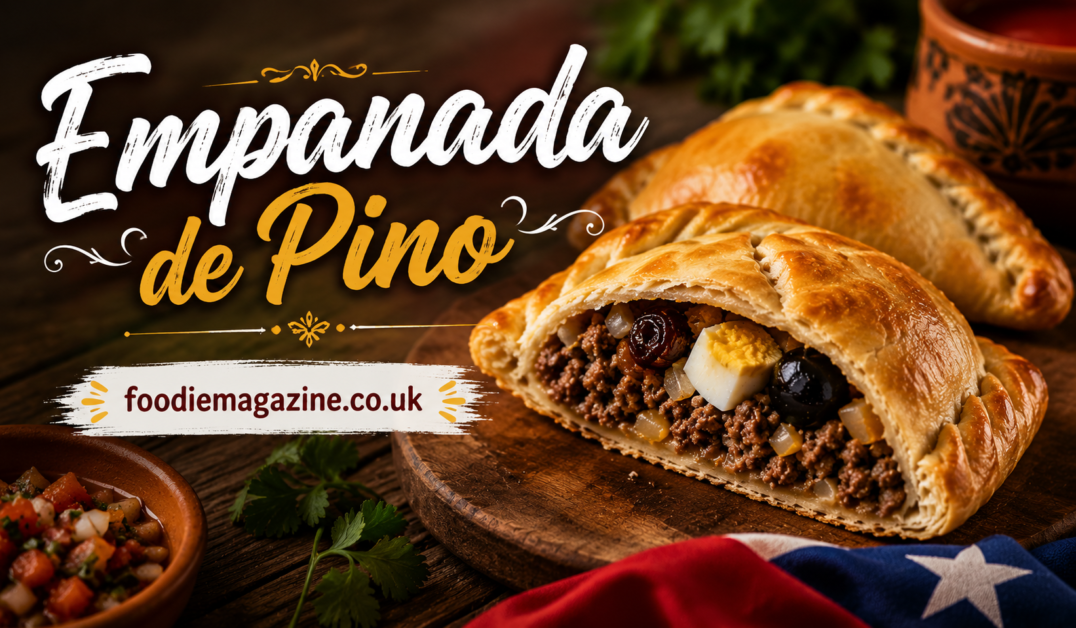
Empanada de pino is a baked pastry filled with a savory mixture known as “pino.” That filling is made from slow-cooked beef, onions, spices, and a few signature ingredients that make it unmistakable.
But calling it “just a meat pie” would miss the point entirely.
It’s layered. It’s balanced. It’s built with intention.
The classic pino filling usually includes:
- Ground or finely chopped beef
- Onion cooked until soft and slightly sweet
- Hard-boiled egg
- Black olives
- Sometimes raisins for a sweet contrast
- Seasonings like cumin, paprika, salt, and pepper
What makes it special is not just what’s inside, but how those ingredients interact when baked inside a golden crust.
The Cultural Weight Behind Empanada de Pino
Food becomes powerful when it’s tied to memory. In Chile, empanada de pino is not an occasional snack—it’s part of the national rhythm.
During Independence celebrations, especially in September, families gather to prepare large batches. It’s common to see kitchens filled with chopped onions, steaming pans of beef, and trays of dough waiting to be filled.
This is not fast food. It’s shared food.
Grandparents pass down recipes. Children help seal dough edges. Everyone has a role, even if it’s just brushing egg wash over the top before baking.
That’s where its real value sits—not just in taste, but in repetition across generations.
A Brief History: Where It All Started
The empanada itself has European roots, especially from Spanish cuisine. But once it arrived in Latin America, it transformed.
Chile made it its own.
The “pino” filling is believed to come from a blend of Spanish culinary influence and local adaptation. Over time, Chileans refined it into something richer and more balanced than its early versions.
What emerged was a dish that feels deeply local, even though its origins are global.
That evolution is important. It shows how food doesn’t stay fixed—it adapts to people, geography, and time.
What Makes the “Pino” Filling So Unique?
Let’s talk about the heart of it: the pino.
If you’ve ever tasted it, you know it’s not just seasoned meat. It has a specific identity.
The onion base
Onions are cooked slowly until they become soft and slightly sweet. This step is crucial. It creates the base flavor that holds everything together.
The beef
Traditionally, beef is chopped or minced and cooked until tender. It absorbs the onion and spice mixture, creating depth rather than dryness.
The seasoning
Cumin is non-negotiable. It gives the filling its warm, earthy character. Paprika often adds color and subtle smokiness.
The contrast ingredients
Here’s where it gets interesting:
- Olives bring saltiness
- Egg adds richness
- Raisins (optional but traditional) introduce sweetness
That contrast is what makes each bite layered instead of flat.
The Dough: Simple but Essential
The dough used for empanada de pino is usually a wheat-based pastry. It’s not flaky like puff pastry, nor too soft like bread dough. It sits somewhere in the middle.
Its job is simple: hold the filling without overpowering it.
A good empanada dough should:
- Be firm enough to contain juices
- Brown evenly in the oven
- Stay slightly crisp on the outside
- Remain tender inside
This balance is harder to achieve than it looks. That’s why experienced home cooks often say the dough is where beginners struggle most.
How Empanada de Pino Is Traditionally Prepared
Making empanada de pino is not just cooking—it’s a process.
Step 1: Preparing the filling
The onion and beef are cooked separately at first, then combined. This ensures proper texture control.
Step 2: Cooling the mixture
This is important. Warm filling can ruin dough consistency.
Step 3: Preparing the dough
Rolled out into circular shapes, ready for filling.
Step 4: Assembly
A spoonful of pino goes into the center, followed by egg, olive, and sometimes raisins.
Step 5: Sealing
Edges are folded and pressed firmly, often with a decorative twist.
Step 6: Baking
Golden brown, slightly crisp, and aromatic when done right.
Each step matters. Skip one, and the result changes.
When and How It’s Eaten in Chile
You don’t need a special reason to eat empanadas in Chile—but tradition gives them one anyway.
The biggest moment is during national celebrations in September. Families often prepare dozens at a time. They’re served with drinks, salads, and shared across long tables filled with conversation.
But beyond holidays, they’re also:
- A common lunch option
- A bakery staple
- A road trip snack
- A comfort food after long days
It’s flexible like that. Formal and casual at the same time.
Regional Variations You Should Know
Even though the core recipe stays consistent, small differences appear depending on the region.
Some areas prefer:
- More olives
- Less sweetness
- Spicier seasoning
- Different dough thickness
In coastal regions, you might even find seafood-inspired empanadas, but the classic beef version remains dominant.
These variations don’t replace tradition—they sit alongside it.
Why Empanada de Pino Stands Out Globally
Every country has its version of stuffed pastry. So what makes this one different?
It’s the balance.
Many savory pastries lean too heavily toward either spice or richness. Empanada de pino keeps everything in tension—sweet, salty, savory, and aromatic all at once.
It also carries cultural weight. You’re not just eating ingredients; you’re experiencing a tradition that has been repeated for generations.
That combination is rare.
A Simple Way to Appreciate It Like a Local
If you ever try empanada de pino, don’t rush it.
Eat it warm, ideally fresh from the oven. Break it open slowly and notice how the filling holds together. Pay attention to the contrast between the soft interior and the crisp crust.
And if you’re in Chile during a celebration season, don’t just eat it alone. Share it. That’s the real experience.
Nutritional Perspective (Balanced View)
Let’s be honest—this isn’t a light snack.
But it’s also not something meant to be judged through modern diet trends.
It provides:
- Protein from beef
- Energy from dough
- Fats from cooking and filling
- Small amounts of fiber from onions and raisins
It’s a complete, satisfying meal when eaten in moderation.
Why People Keep Coming Back to It
There’s a reason empanada de pino has survived generations without losing relevance.
It’s not just nostalgia.
It works.
The flavor profile is balanced. The texture is satisfying. The preparation is meaningful. And it fits both casual and celebratory moments.
Some foods fade over time. This one doesn’t.
Conclusion
Empanada de pino isn’t trying to impress you with complexity. It doesn’t need modern reinvention or fancy presentation.
What it offers is something more grounded: consistency, tradition, and a flavor that feels like home to millions of people.
And that’s why it matters.
FAQs
1. What is empanada de pino made of?
It’s a baked pastry filled with beef, onions, olives, egg, and sometimes raisins, seasoned with cumin and spices.
2. Is empanada de pino sweet or savory?
It’s mainly savory, but it has a subtle sweet contrast from raisins and caramelized onions.
3. When is empanada de pino traditionally eaten?
It’s especially popular during Chile’s national celebrations in September, but eaten year-round.
4. Can empanada de pino be made at home?
Yes. It requires simple ingredients, but attention to texture and balance is key.
5. What makes it different from other empanadas?
The combination of beef, olives, egg, and optional raisins creates a unique sweet-savory balance.
Read also: How Dulce de Leche Candy Is Made A Sweet Tradition with Rich Flavor